
Last updated November 23, 2026
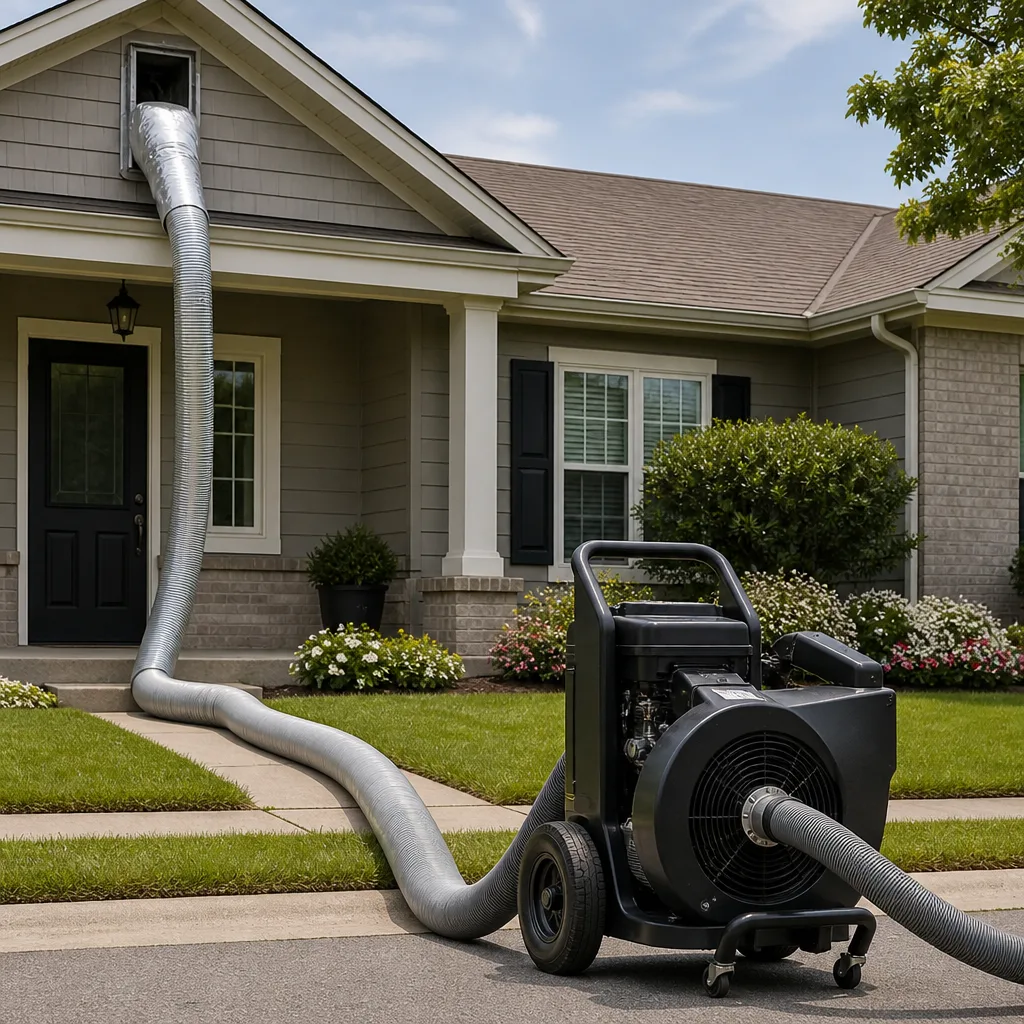 Whole-home duct cleaning
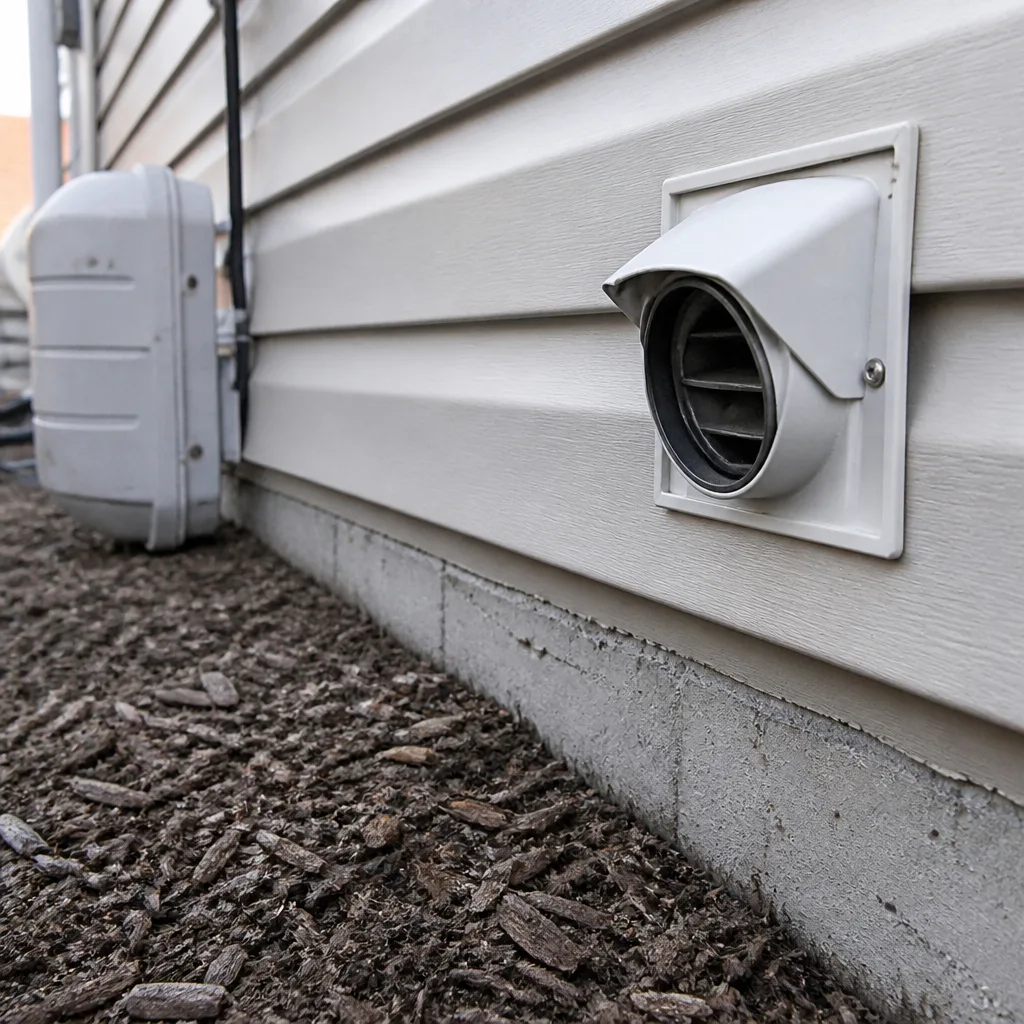 Dryer vent cleaning
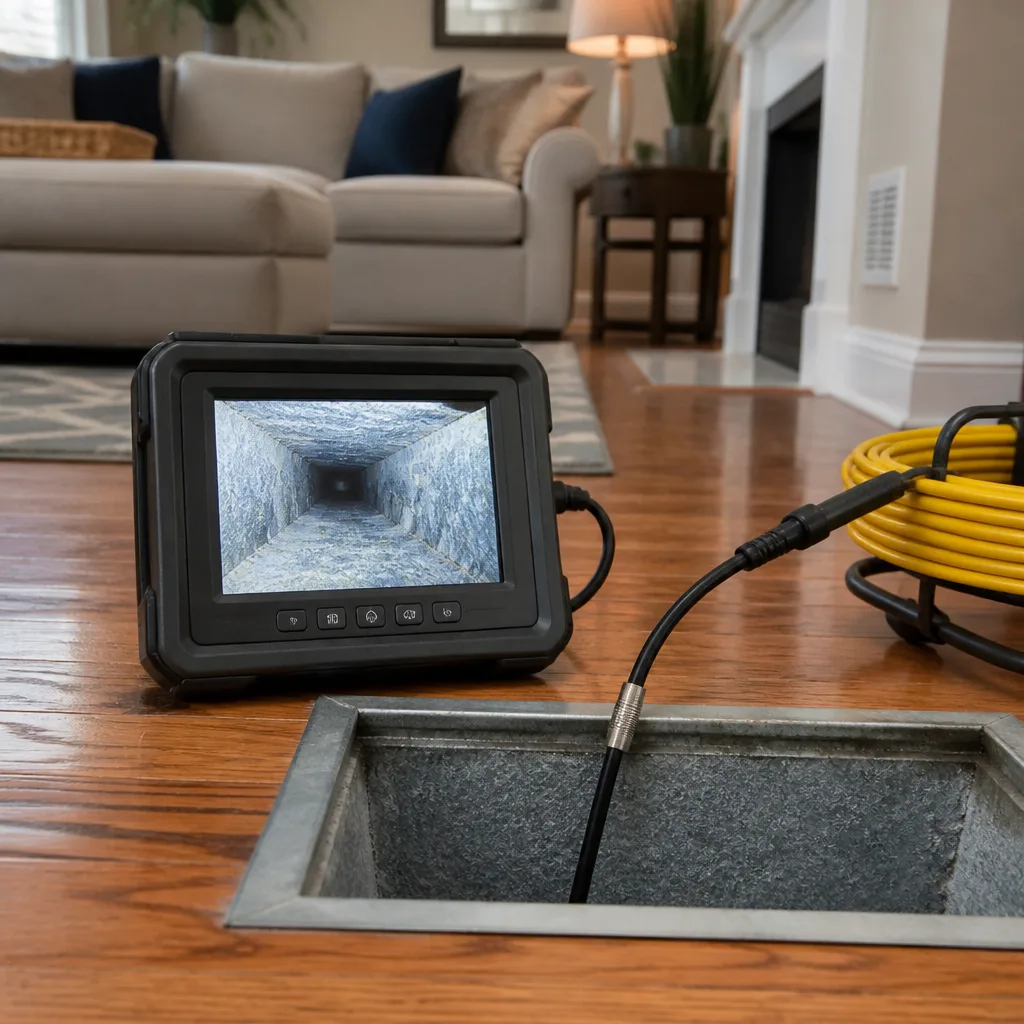 Camera inspection
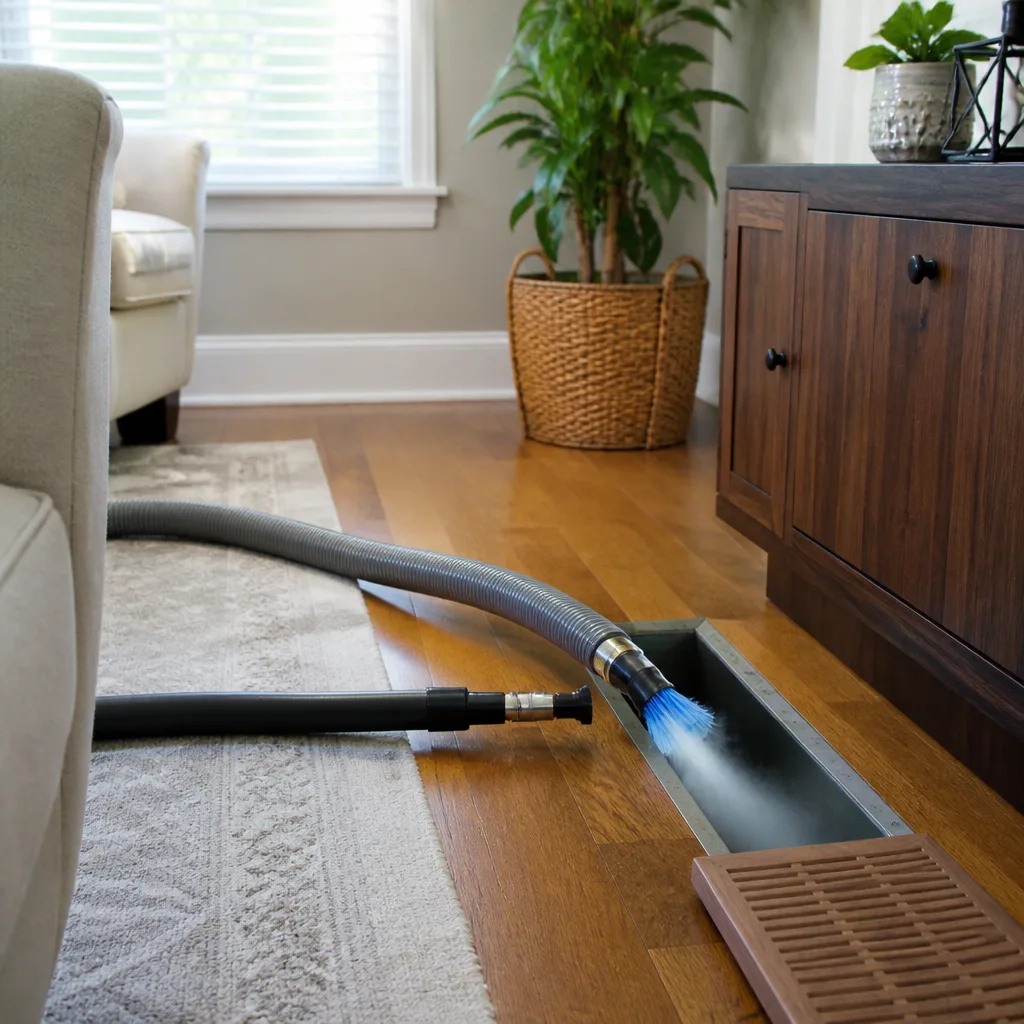 Sanitizing & deodorizing
Whole-system duct and dryer vent check with before-and-after photos - you see exactly what came out of your vents
That "$99 whole-house special" is a bait ad - the real number appears once they are in your hallway, or the "clean" is a shop-vac at the register. We photograph the inside of your ducts before and after instead.
Seasonal Air Duct Cleaning Care for NoDa: Year-Round Homeowner’s Guide
Most homeowners treat duct cleaning as a once-a-decade decision. The actual problem is seasonal: your ductwork takes on a different load of debris in every season, and most of it accumulates quietly. NoDa sits in a humid subtropical climate where spring pollen is heavy, summer humidity is persistent, autumn brings dry leaf litter and cooler air, and winter is mild enough that your HVAC system cycles less than it would in colder regions. Each of these conditions leaves a distinct signature inside your ducts. This guide walks through all four seasonal cycles and pairs each one with the specific inspection or maintenance action it calls for, so you know when to check filters, when to look for condensation, and when to schedule professional service.
Quick Answer
Seasonal air duct care in NoDa means matching your maintenance actions to what each season deposits in your system: assess and replace filters after spring pollen, watch for condensation and early biofilm in summer, inspect the heat exchanger and diffusers before heating season begins in fall, and schedule professional cleaning in late winter or early spring before compacted debris hardens. Professional service once every few years, timed to the seasonal cycles, keeps the system cleaner for longer than a random once-a-year cleaning.
Styles & brands we work with
- Whole-home duct cleaning
- Dryer vent cleaning
- Camera inspection
- Sanitizing & deodorizing
Table of Contents
- Spring: Post-Pollen Filter Assessment and Return Grille Inspection
- Summer: Humidity, Flex Duct Condensation, and Early Biofilm
- Fall: Pre-Heating-Season Inspection Checklist
- Winter: Why Mild Weather Makes Spring Cleaning Harder
- How to Time a Professional Cleaning for Maximum Longevity
- Why Duct Cleaning Is Only One Part of the System
- Common Mistakes to Avoid
- Frequently Asked Questions
Spring: Post-Pollen Filter Assessment and Return Grille Inspection
Charlotte’s spring pollen season is one of the heaviest in the Southeast, and the fine yellow-green film you see on your car in April is the same material that loads your return duct filters in a matter of weeks. Tree pollen arrives first, usually late March through April, followed by grass pollen in May. Because the fine particles are small enough to pass through standard filter media once the filter is partially loaded, the failure point isn’t a torn filter – it’s a saturated one. The airborne material that bypasses the filter lands on the interior duct lining, where it becomes part of the settled debris layer.
This is what we actually do when we inspect ductwork in a NoDa home after pollen season: we look at the return grille first, because that’s where the evidence shows up clearly. Fine yellow dust on the grille face tells you pollen is making it past the filter. Dark grey or brown dust on the duct interior walls tells you debris has accumulated over multiple seasons. The inspection is not complicated – the question is whether the filter media is doing its job or just being a placeholder.
A practical spring protocol:
- Pull the return filter and hold it up to a light source. If you can’t see light through it, it’s fully loaded and has been bypassing for a while.
- Look at the return grille face with a flashlight. Fine yellow dust means pollen is passing the filter.
- Check the filter’s MERV rating against what your system’s blower can handle. Higher MERV isn’t always better if it chokes airflow.
- Write the date on the filter frame when you install it so you know when the next replacement is due.
- If you see visible debris on the duct interior past the return boot, book a professional cleaning rather than waiting out the summer.
Timing matters here. If you clean the ducts in mid-May after pollen has stopped, you start the summer with a clean system. If you wait until June, you’ll have spent May pushing pollen into the duct lining. Spring is the single most productive season for a professional air duct cleaning in NoDa, given the local pollen load.
Summer: Humidity, Flex Duct Condensation, and Early Biofilm
Summer in NoDa brings persistent humidity, and humidity interacts with your ductwork in ways most homeowners never see. The risk is concentrated on flex duct runs in unconditioned spaces – attics, crawlspaces, and garage ceilings. When cool air moves through a poorly insulated flex duct and the surrounding air is warm and humid, moisture condenses on the duct’s exterior. That moisture can wick into the duct’s inner liner through seams, joints, and any point where the outer vapor barrier has been compromised. Once the inner surface stays damp, dust that was previously dry becomes a substrate.
Early biofilm on a duct interior is not the same thing as ordinary dust. Normal dust looks like a uniform grey or brown coat on the duct wall, dry to the touch. Biofilm shows as a darker, irregular patch – often mottled, sometimes with a slight sheen on the surface – and it tends to appear in runs after the first major condensation event. If you can reach a flex duct run in the attic and the outer jacketing feels damp or shows condensation streaks, that’s the signal to look further. It is not a signal to try to wipe it down yourself.
What to check in summer:
- Condensation streaks on attic or crawlspace flex duct jacketing.
- Any flex duct run that passes through unconditioned space without a continuous vapor barrier.
- Musty or earthy odors in rooms served by the affected run – a distinct smell from ordinary household dust.
- Water staining on duct insulation, ceiling tiles, or joists nearby.
- Visible airflow reduction at the supply diffuser in rooms served by the suspect run.
A system that becomes damp and stays damp is a job for professional service, not a DIY cleaning. Rotobrush rotary brush equipment is designed to clean the duct interior thoroughly without damaging the liner, and professional drying and sanitizing are part of the same visit. If you’ve noticed musty odors or damp ductwork in your NoDa home, this is the season to have it inspected, not deferred until fall.
Fall: Pre-Heating-Season Inspection Checklist
Fall is the season when most HVAC wear becomes visible. During summer, your system runs heavily and the air handler gets a lot of use. When fall arrives and heating season begins, the system has to transition to heating mode, and any dust that accumulated on the heat exchanger surfaces over the cooling season gets baked onto them. Baked-on dust is harder to remove and reduces the heat exchanger’s efficiency. It’s also the point where supply diffusers start blowing visible dust into the room because the change in airflow pattern kicks up the settled debris layer.
NoDa sits in a climate where autumn is gradual – there’s no single freeze date that turns the heating system on for the season. Instead, you’ll have heating and cooling alternating for several weeks. That alternating cycle is actually the ideal window for an inspection, because you can check both the heating and cooling sides of the system while it’s in active use.
The pre-heating-season checklist:
- Remove and inspect the air handler filter after the last heavy cooling week of the year.
- Look at the supply diffusers throughout the home. Visible dust on the louver faces after the system has been running for an hour points to a dirty supply plenum or duct run.
- Ask for a heat exchanger inspection if you can – the technician should look at coil surfaces for baked-on dust and secondary damage.
- Check the return grille condition again, since summer cycle debris has accumulated since spring.
- Walk the duct runs you can access and look for loose joints, sagging flex duct, or separated sections where the outer jacketing has failed.
- Confirm the filter MERV rating is matched to heating season airflow, which can differ from cooling season needs.
If dust is visibly blown from diffusers after the system has been running, that’s not a filter problem – it’s a duct interior problem. Fall is the right window to act before the heating season pushes that dust into the living space.
Winter: Why Mild Weather Makes Spring Cleaning Harder
Here’s a counterintuitive point about NoDa winters: because the weather is mild, your HVAC system cycles less than it would in a colder climate. This isn’t a good thing for your ductwork. Constant air movement in a well-used system keeps fine dust suspended and moving toward the filter, where some of it can be captured. When a system cycles less, that airflow slows down. The fine dust that would normally be carried to the filter settles onto the duct interior instead, and over a winter it compacts into a layer that’s harder to remove than the loose debris of summer.
Compacted debris is not a cosmetic problem. Debris that has settled and compacted develops a defined surface, and that surface becomes a new substrate for mold and biological growth once spring humidity returns. It also reduces the effective airflow area of the duct, forcing the blower to work harder to deliver the same volume. By the time spring arrives, the compacted layer has usually been in place for months.
What winter maintenance looks like in practice:
- Run the system briefly every week, even when no heating or cooling is needed, to keep air moving and prevent dust from settling.
- Watch filter condition monthly rather than waiting for a scheduled replacement.
- Listen for changes in blower sound – a slight rise in blower pitch can indicate the system is working harder against reduced duct area.
- Look for dust rings on the supply diffuser faces, a sign that airflow is being restricted behind them.
- Plan your spring cleaning now rather than waiting for the first pollen week. Booking and cleaning early in March prevents pollen from being layered onto already-compacted debris.
Winter is also the best season for a proactive hvac cleaning visit that addresses the air handler, the coil, and the ductwork together, before spring pollen reintroduces a new layer. Our technicians have up to 8 years of experience reading the signs of compaction in winter systems and can identify whether cleaning is warranted or can be deferred to early spring.
How to Time a Professional Cleaning for Maximum Longevity
Timing a professional cleaning isn’t about following a fixed calendar. It’s about matching the cleaning to the contamination cycle so you get the maximum interval between visits. Here’s the framework we use when advising NoDa homeowners on scheduling:
| Season | What Accumulates | Best Action |
|---|---|---|
| Spring (Mar-May) | Tree and grass pollen; fine particulate that bypasses filters | Professional cleaning after pollen peaks, typically mid-to-late May |
| Summer (Jun-Aug) | Humidity-driven condensation in flex duct; early biofilm development | Inspection of attic and crawlspace runs; sanitizing if biofilm is confirmed |
| Fall (Sep-Nov) | Baked-on dust on heat exchanger; supply diffuser dust blow-by | Air handler and coil inspection; duct interior review |
| Winter (Dec-Feb) | Compacted settled debris from reduced system cycling | Proactive cleaning if none was done in spring |
The best single window for a full professional cleaning in NoDa is late winter or early spring, before pollen season starts. This gives the longest interval before the next seasonal contamination cycle begins. If you’ve missed that window, mid-to-late May – after the tree and grass pollen peaks – is the next best option. Cleaning in June or July is still worthwhile, but you’ll have carried the pollen load through the system into the cooling season, which usually shortens the interval before the next cleaning is needed.
For homes with pets, with recently renovated ductwork, or with a history of visible dust at diffusers, we recommend a full-system clean followed by a schedule check each fall. That’s the combination that gives the longest useful interval. The full-system clean addresses existing debris and the fall check confirms whether any new accumulation has developed over summer.
Why Duct Cleaning Is Only One Part of the System
Ductwork doesn’t exist in isolation. The air handler, the coil, the flex duct runs, the return plenum, the supply diffusers, and the dryer vent all share the same air. A duct cleaning that addresses only the visible runs leaves the rest of the system to keep contributing debris. That’s why we bring a full-service approach to every NoDa job rather than a single-step vacuum.
What a complete visit includes:
- Duct cleaning with Rotobrush rotary brush equipment, which clears the duct interior wall of the settled and compacted debris layer, not just the loose dust.
- Dryer vent cleaning as a standalone service. Lint accumulation in the dryer vent is a fire-safety concern most homeowners overlook, and it’s a different system from the HVAC ducts. It deserves its own dedicated cleaning, not a quick pass at the end of a duct job. dryer vent cleaning in NoDa is a service we treat as its own appointment for that reason.
- HVAC cleaning of the air handler and coil, where baked-on dust accumulates and where cleaning restores airflow and heating efficiency.
- Sanitizing for systems with confirmed biofilm, musty odors, or post-condensation moisture issues.
- Duct repair and sealing for loose joints, separated flex duct, or compromised vapor barriers found during inspection.
We use Abatement Technologies containment and air filtration equipment during service to keep dust and debris from spreading into the living space. That’s the same professional-grade standard commercial contractors use, and it’s the difference between a service that protects your home and one that just moves dust around. Once the cleaning and sealing work is complete, we can recommend air quality upgrades using Honeywell and Aprilaire product lines, which keeps the system cleaner between visits.
See the difference
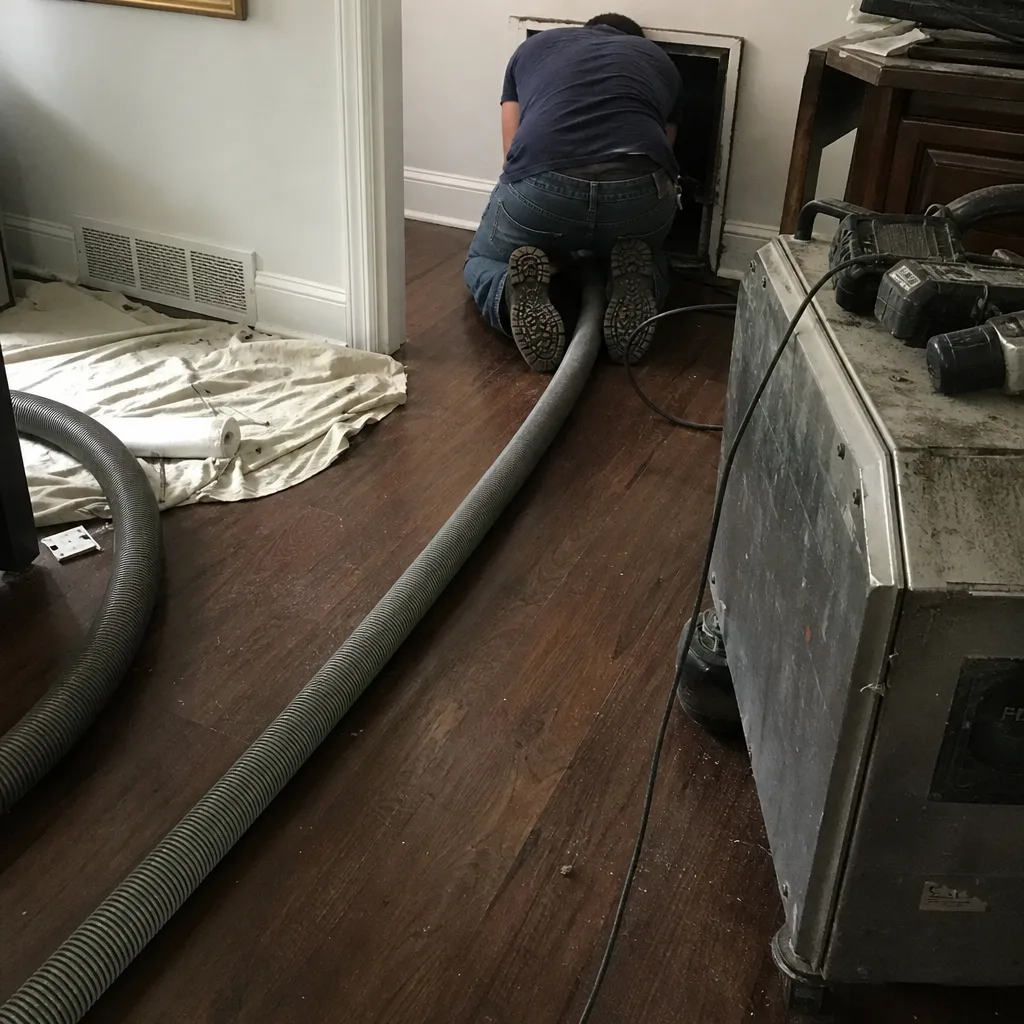 Before
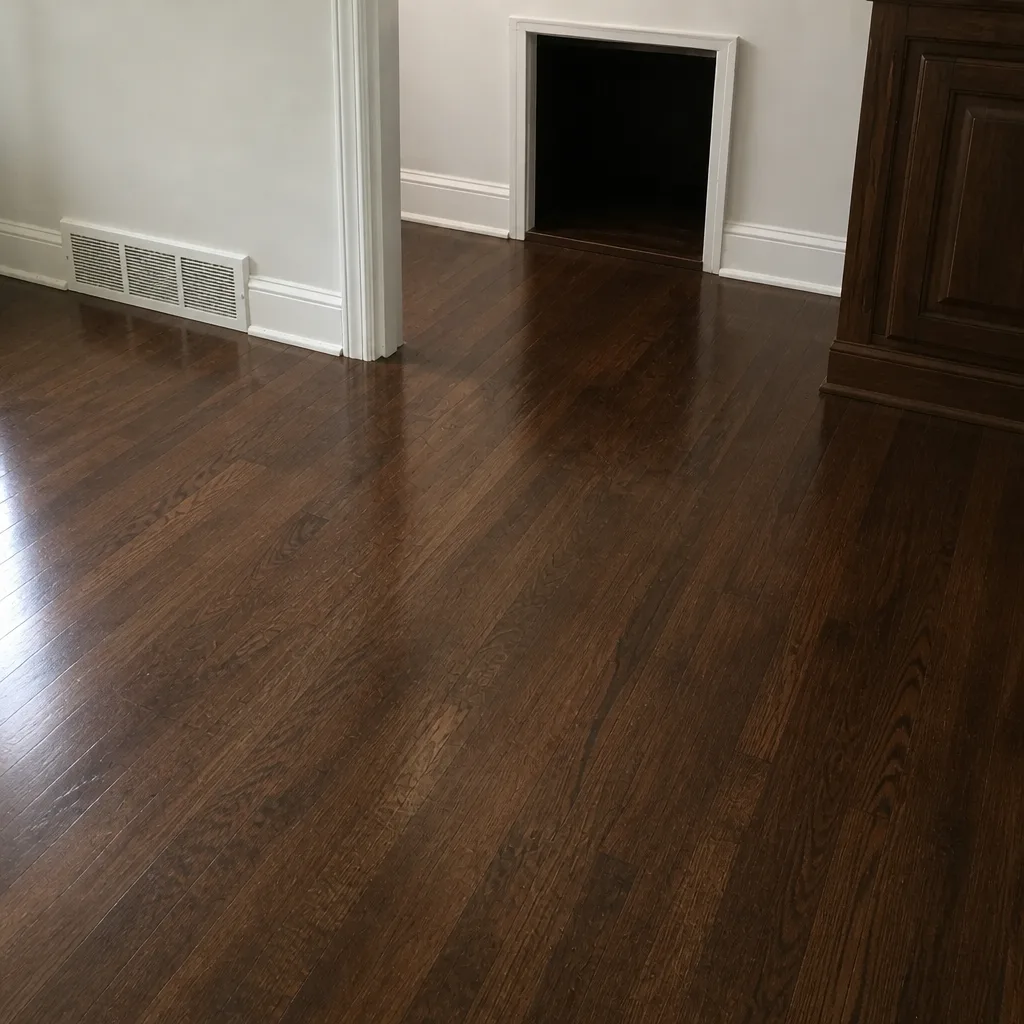 After
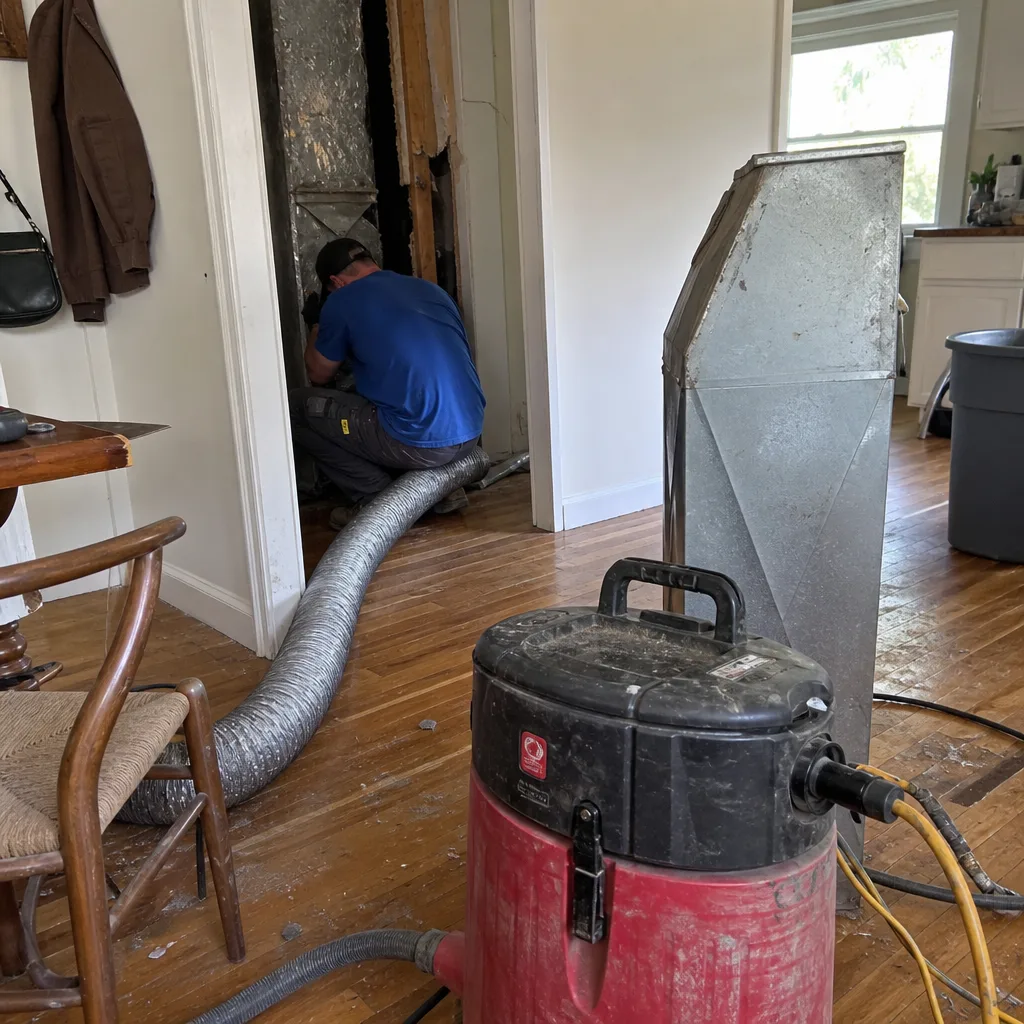 Before
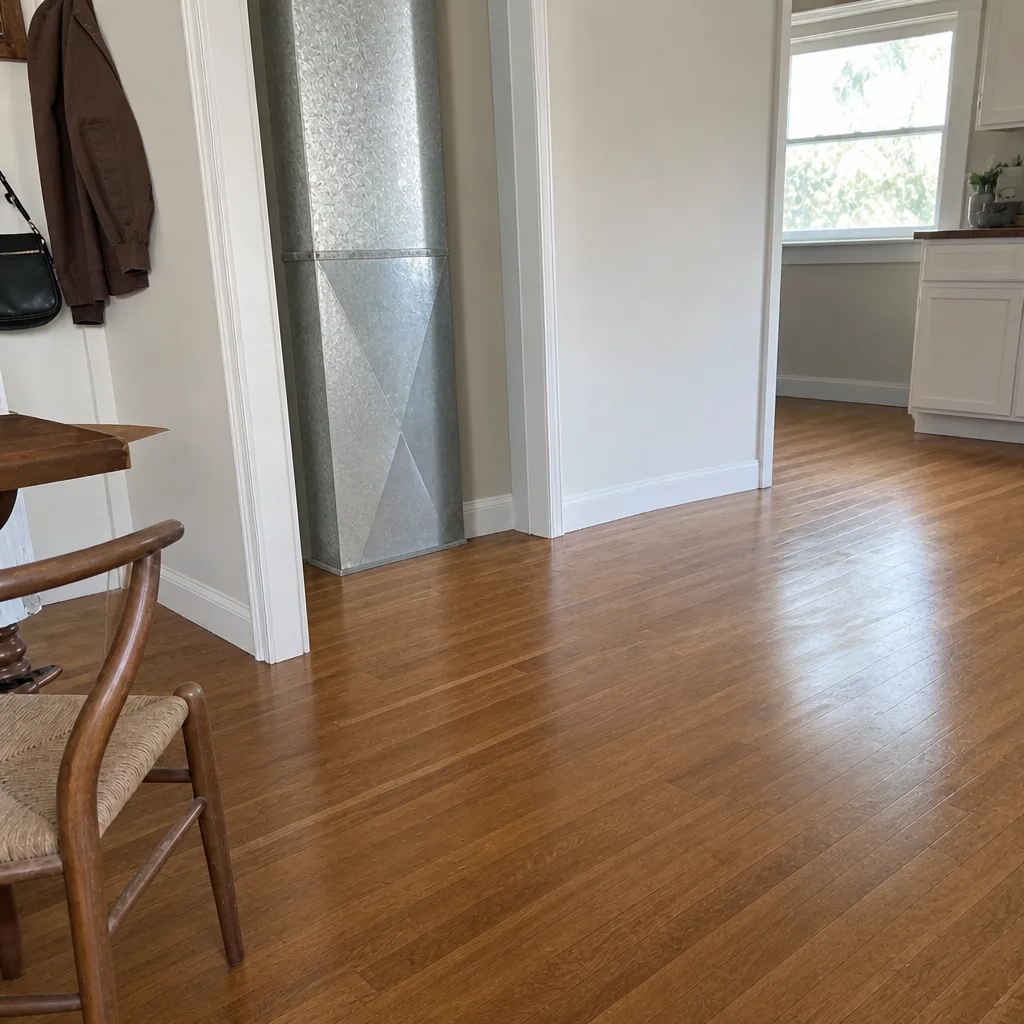 After
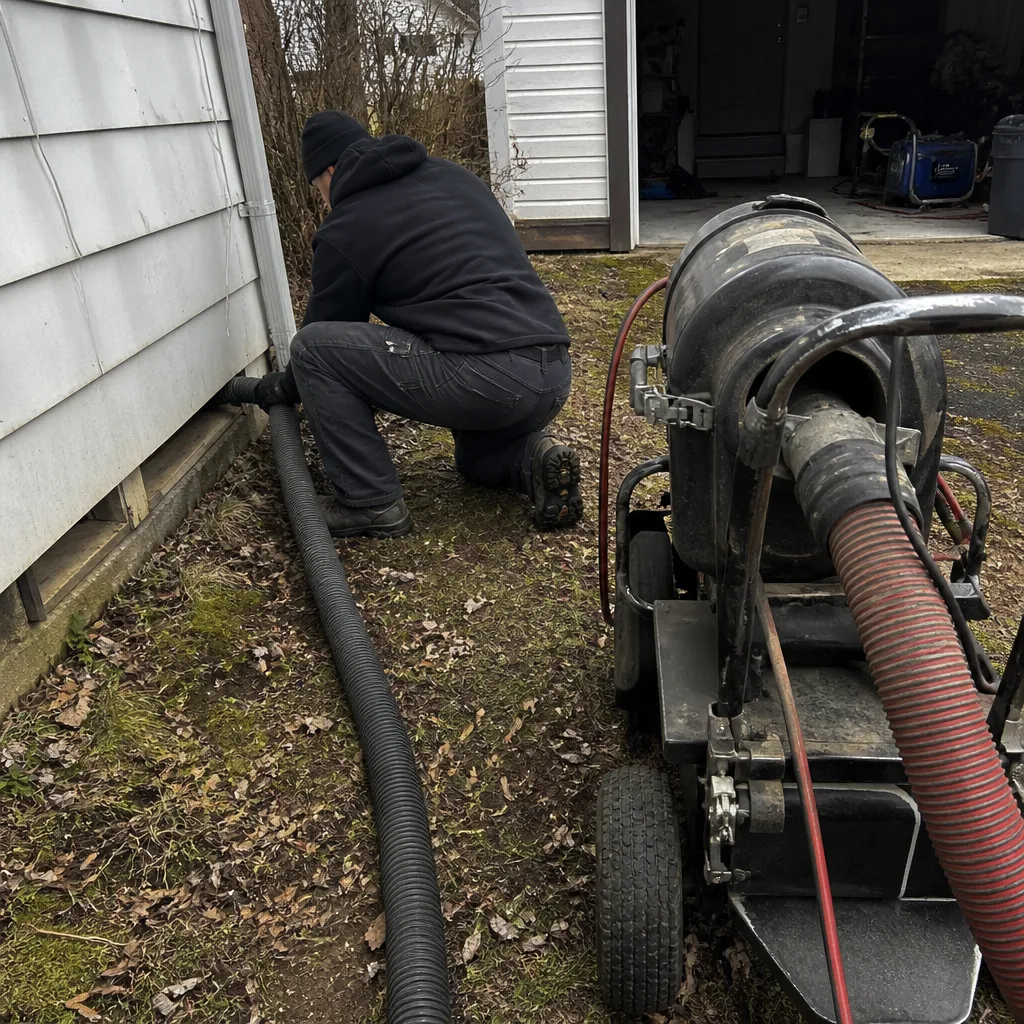 Before
 After
Common Mistakes to Avoid
- Replacing filters by the calendar instead of by loading. In NoDa, where spring pollen is heavy, a filter that would normally last three months may be fully loaded in six weeks. Check the filter in April and May rather than waiting for the next scheduled replacement.
- Treating summer musty odors as normal humidity. A persistent musty smell is not the same as ordinary humidity. It points to condensation in the duct runs, and the run should be inspected before the smell becomes a biofilm problem.
- Running heat for the first time in fall without checking the heat exchanger. Baked-on dust from cooling season hardens on heat exchanger surfaces and reduces efficiency. Inspect before the heating season begins, not after.
- Skipping winter system cycling. A system that sits idle for weeks lets fine dust settle and compact. Running the system briefly each week prevents that layer from hardening.
- Cleaning ducts in mid-summer and calling it done for the year. Cleaning in June means the system carried a full spring pollen load into the cooling season. Late fall or early spring cleaning is far more effective.
- Ignoring the dryer vent. Lint accumulation in the dryer vent accumulates fast in a busy household and is a fire-safety risk independent of duct cleanliness. Clean it on its own schedule, not as an add-on.
- Choosing a cleaning based on coupon pricing. A one-step vacuum that doesn’t address the heat exchanger, dryer vent, and duct interior sealing doesn’t reduce the contamination cycle. The job is worth doing completely or not at all.
When to Call a Professional
Call a professional when the signs point to a full-system problem rather than a filter issue. Visible dust blowing from supply diffusers after the system has been running for more than an hour, musty odors in rooms served by a specific duct run, condensation on flex duct in the attic or crawlspace, and dust rings on the return grille face are all signals that the duct interior needs professional attention. A single filter change won’t fix any of them. Duct repair and sealing may also be part of the job if the inspection finds separated flex duct or failed joints. Air Duct Cleaning NoDa offers free estimates in NoDa. Call (833) 509-5357. We answer 24/7. Fast dispatch from 7am to 7pm, Sunday through Friday.
A note on pricing: we set a single flat price per system agreed before work starts, so you know the cost before anything happens. This is a scheduled job rather than an emergency call, and the value comes from doing the full job correctly rather than from speed of arrival.
Frequently Asked Questions
Once every two to three years is typical for a home without pets or recent renovations, but the timing should follow the seasonal cycle rather than a fixed calendar. Because NoDa sees heavy spring pollen and persistent summer humidity, visiting the ductwork in late winter or early spring gives you the longest interval between cleanings. Calling for an inspection in fall is also a good check against summer condensation damage.
We quote per system by written estimate rather than a per-vent price, so cost depends on the number of runs, the condition of the system, and whether repair or sealing is needed. The written estimate sets the final price and there’s no hidden add-on once work starts. Call (833) 509-5357 for a free estimate – estimates are free.
Cheap duct cleaning quotes are often for a single-step vacuum that doesn’t address the heat exchanger, the flex duct runs in the attic, the dryer vent, or sealing. That kind of job doesn’t reduce the seasonal contamination cycle because the rest of the system keeps contributing debris. We use professional-grade Rotobrush and Abatement Technologies equipment on every job so the cleaning addresses the full system, which is where the cost difference comes from.
Ask for before-and-after photos of your own duct interior and the air handler. A full-service visit should also include an inspection report noting what was found, what was cleaned, and any repair work recommended. That documentation is the proof that the dust you were seeing before the cleaning is gone after it.
Normal dust is a uniform grey or brown coat on the duct interior wall and feels dry. Early biofilm shows as a darker, irregular patch – sometimes with a slight sheen – that tends to appear in runs after a condensation event. If you see it, have the run inspected and sanitized rather than trying to wipe it down. Call (833) 509-5357 to book an inspection.
Consumer-grade vacuums and shop vacs don’t have the suction or the brush equipment to clear compacted debris from the duct interior, and they can push fine particulate into the air handler and coil. Rotobrush rotary brush equipment and Abatement Technologies containment are the tools designed for this job. If you’ve used a shop vac and still see dust at the diffusers, that’s the sign to book a professional cleaning. Call (833) 509-5357 for a free estimate.
The Bottom Line
Seasonal duct care in NoDa is about matching the maintenance action to what each season drops in the system. Spring loading from tree and grass pollen calls for a filter check and a professional cleaning before summer humidity starts. Summer humidity demands a look at any flex duct runs in the attic or crawlspace. Fall is your window for a heat exchanger and supply diffuser check. And winter’s mild weather is the season to plan your spring cleaning, not to assume there’s nothing to do. Done this way, the duct system stays cleaner for longer, and the professional visit you book delivers its full value. Air Duct Cleaning NoDa brings professional-grade equipment and a full-system scope to every job, from Air Duct Cleaning NoDa through to dryer vent cleaning when the job calls for it. Call (833) 509-5357 for a free estimate. We answer 24/7. Fast dispatch from 7am to 7pm, Sunday through Friday. Closed Saturday.
Written by the team at Air Duct Cleaning NoDa.